

Single, Dual, and Triple Agonists: What Receptor Count Means
Compare single, dual, and triple receptor strategies, why multi-agonists are single engineered molecules, and what receptor count can and cannot explain.
| Single-target example | Semaglutide: GLP-1 receptor |
|---|---|
| Dual-target example | Tirzepatide: GIP and GLP-1 receptors |
| Triple-target example | Retatrutide: GIP, GLP-1, and glucagon receptors |
| Key distinction | Target count does not describe equal activity at each target |
| Research comparison | Match model, exposure, endpoint, and analysis |
| Hero product | Hero RT |
Dual vs triple agonist compares molecules by how many receptor types they activate. In metabolic peptide research, semaglutide supplies a single-target example, tirzepatide a dual-target example, and retatrutide a triple-target example. That classification is useful, but it is only the beginning.
A receptor count does not describe the strength, duration, or balance of each signal. It also does not tell a researcher which molecule fits a particular experiment. Understanding the design behind the labels makes the comparison much more informative.
Origin story: from one target to coordinated signaling
Semaglutide’s discovery program developed an extended-exposure GLP-1 analog. Tirzepatide’s program investigated combined GIP and GLP-1 receptor activity. Retatrutide’s program added glucagon receptor activity within another engineered peptide (Lau et al., 2015; Coskun et al., 2018; Coskun et al., 2022).
These are distinct molecular programs. A triple agonist is not necessarily a dual agonist mixed with a third peptide. In these examples, the receptor activities come from one designed molecule. Separate ingredients would create a different formulation and a different experimental question.
The GLP-1, GIP, and glucagon explainer provides the receptor background. Here, the focus is how single-molecule designs combine those activities and how researchers can compare them fairly.
How single, dual, and triple agonists work
An agonist activates a receptor. A single-target label identifies one intended receptor type; dual and triple labels identify two and three. The number describes breadth across those targets, rather than a simple scale of overall strength.
Tirzepatide’s discovery paper examined GIP and GLP-1 receptor activity through laboratory and early clinical research. Retatrutide’s paper reported activity at all three metabolic receptors, with greater GIP receptor activity relative to its GLP-1 and glucagon activities in the described assays (Coskun et al., 2018; Coskun et al., 2022).
That balance matters. Three checked boxes do not mean three equal signals. The concentration needed for a defined response can differ between receptors, and measured activity depends on the assay. Comparing values across unrelated assay systems can introduce another source of error.
Also distinguish binding from activation. A binding measurement asks about interaction with the receptor; a functional assay measures a downstream response. An article or report should identify which was measured before using either as a shorthand for potency.
Key evidence: a receptor map is not an outcome ranking
| Research example | GLP-1 receptor | GIP receptor | Glucagon receptor | Design question |
|---|---|---|---|---|
| Semaglutide | Agonist | Not an intended agonist target | Not an intended agonist target | Single-target GLP-1 strategy |
| Tirzepatide | Agonist | Agonist | Not an intended agonist target | Dual incretin strategy |
| Retatrutide | Agonist | Agonist | Agonist | Triple-receptor strategy |
The discovery papers support these target assignments. They do not make the table a prediction of every outcome in every model. A whole-body measurement combines target activity with exposure, tissue responses, and feedback (Lau et al., 2015; Coskun et al., 2018; Coskun et al., 2022).
Retatrutide’s discovery study reported that glucagon-receptor-mediated energy expenditure contributed to weight-related findings in obese mice. The mouse model belongs in that sentence. The result should not be rewritten as a directly established mechanism for every human trial outcome (Coskun et al., 2022).
For a mechanistic comparison, define what evidence would distinguish the receptor contributions. Receptor-specific systems or suitable controls can answer a different question from an organism-level endpoint. Choose the experiment around the question rather than around the largest number of targets.
For clinical comparisons, preserve the study population, comparator, duration, and endpoint. The retatrutide versus tirzepatide guide discusses the two compounds directly. Receptor maps can explain why a comparison is interesting; trial design determines what its result supports.
Weak spots: what we don’t know
More targets can create more questions about selectivity, exposure, and interpretation. If two compounds differ in several structural features, a difference in response does not isolate the contribution of one extra receptor.
Equal mass does not solve that problem. Molecular weight differs, and equal molar concentration still does not guarantee equal receptor occupancy or matched exposure. The chosen normalization should fit the question and be reported clearly.
As of November 5, 2026, FDA-approved medicines containing semaglutide and tirzepatide exist, while retatrutide remains investigational. These statuses concern particular medicines and development programs. They do not transfer to supplier-branded research vials (FDA, 2021; FDA, 2023; Eli Lilly, 2026).
The categories single, dual, and triple are also broader than these three examples. Other molecules can share a target count while using different targets or activity balances. Always name the receptors rather than relying on the category alone.
Handling agonist research materials in the lab
Begin with identity, content, and assay compatibility for each material. Keep separate records even if all materials arrive as lyophilized powders. Similar packaging does not establish comparable chemistry or solution behavior.
For a concentration example, bring a nominal 5 mg sample to a final volume of 2 mL. The result is 2.5 mg/mL, or 2,500 mcg/mL. A 0.10 mL analytical aliquot contains 250 mcg. This is a mass calculation, not an equivalence claim between agonists.
To express molarity, use the documented molecular weight and the appropriate measured peptide content. Do not substitute a chromatographic purity percentage for a content measurement. Record the basis of the calculation so another researcher can reproduce it.
The reconstitution guide and calculator help check concentration math. Solvent selection, storage, and working dilutions still need to fit the material and the experimental system.
Single, dual, and triple agonist FAQ
Is a triple agonist a blend of three peptides?
Not in the retatrutide example. One engineered molecule supplies activity at three receptor types (Coskun et al., 2022).
Does dual mean equal activity at both receptors?
No. Target count does not specify the relative activity measured at each receptor.
Does a higher target count prove a better research tool?
No. A selective single-target comparator may be more useful when an experiment needs to isolate one pathway.
What is Hero RT?
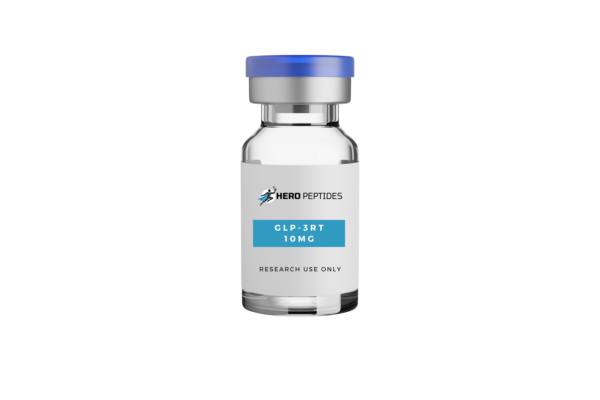
Hero RT is Hero Peptides’ retatrutide research material, listed in 5 mg and 10 mg vial sizes. Its catalog identity is separate from the investigational medicine used in clinical development.
References
- Lau J, et al. Discovery of the Once-Weekly Glucagon-Like Peptide-1 (GLP-1) Analogue Semaglutide. J Med Chem. 2015;58(18):7370-7380. Source.
- Coskun T, et al. LY3298176, a novel dual GIP and GLP-1 receptor agonist for the treatment of type 2 diabetes mellitus: From discovery to clinical proof of concept. Mol Metab. 2018;18:3-14. Source.
- Coskun T, et al. LY3437943, a novel triple glucagon, GIP, and GLP-1 receptor agonist for glycemic control and weight loss: From discovery to clinical proof of concept. Cell Metab. 2022;34(9):1234-1247.e9. Source.
- U.S. Food and Drug Administration. Wegovy (semaglutide), NDA 215256, approval review. 2021. Source.
- U.S. Food and Drug Administration. Zepbound (tirzepatide), NDA 217806, approval package. 2023. Source.
- Eli Lilly and Company. Lilly’s retatrutide delivered greater A1C reduction and more than double the weight loss of Ozempic’s highest approved dose in head-to-head trial. Company topline announcement, October 28, 2026. Source.
For laboratory research use only. Not for human or veterinary use. This article summarizes published research and is not medical advice.