

GLP-1 vs GIP vs Glucagon: The Three Receptors Behind Modern Metabolic Peptides
Three hormones, three receptors, one family of compounds. The science behind semaglutide, tirzepatide and retatrutide.
| GLP-1 | From gut L cells. Insulin up, glucagon down, appetite down |
|---|---|
| GIP | From gut K cells. Insulin up, acts on fat tissue |
| Glucagon | From pancreatic alpha cells. Liver glucose and fat burning up |
| Receptor family | All three are class B GPCRs that signal through cAMP |
| Single agonist | Semaglutide (GLP-1) |
| Dual agonist | Tirzepatide (GIP + GLP-1) |
| Triple agonist | Retatrutide (GIP + GLP-1 + glucagon) |
Semaglutide, tirzepatide and retatrutide all come from the same idea: copy the hormones your gut and pancreas already use to manage a meal, then make them last longer. The difference between them comes down to which hormones they copy. To understand any of these compounds, you need to know three hormones: GLP-1, GIP and glucagon.
Here’s the team, one member at a time.
The incretin effect: why gut hormones matter
If you give someone glucose by mouth, their body releases much more insulin than if you give the same amount of glucose directly into a vein. That difference is called the incretin effect, and in healthy people it accounts for a large share of the insulin response to a meal (Campbell and Drucker, 2013). The hormones responsible are called incretins. There are two: GLP-1 and GIP.
GLP-1: the satiety signal
- Made by: L cells, mostly in the lower small intestine and colon, plus neurons in the brainstem.
- Released when: food reaches the gut.
- Native lifespan: about two minutes, because the enzyme DPP-4 rapidly inactivates it.
What the GLP-1 receptor does (Müller et al., 2019):
- Increases insulin release from the pancreas, but only when glucose is elevated.
- Reduces glucagon release after meals.
- Slows gastric emptying, so nutrients enter the bloodstream more gradually.
- Acts on the hypothalamus and brainstem to increase fullness and reduce food intake.
GLP-1 is the foundation of the whole class. Semaglutide is a pure GLP-1 receptor agonist.
GIP: the comeback incretin
- Made by: K cells in the upper small intestine (duodenum and jejunum).
- Released when: fat and glucose arrive in the gut.
- Native lifespan: a few minutes, also limited by DPP-4.
What the GIP receptor does:
- Increases glucose-dependent insulin release, like GLP-1.
- Acts on fat tissue, where it’s involved in how fat is stored and how fat tissue handles lipids.
- Is found in the brain, where it may influence food intake and nausea.
For years GIP was considered a dead end, because its insulin effect is weaker in type 2 diabetes. Tirzepatide changed that by combining GIP and GLP-1 activity in one molecule. Interestingly, some companies are now studying GIP receptor blockers combined with GLP-1 agonists. Why both approaches seem to work is one of the field’s most debated questions.
Glucagon: the counterweight
- Made by: alpha cells in the pancreas.
- Released when: blood glucose falls, such as during fasting.
- Classic job: tells the liver to release glucose, the opposite of insulin.
What the glucagon receptor does:
- Increases glucose output from the liver.
- Increases fat oxidation in the liver and overall energy expenditure.
- Influences amino acid metabolism in the liver.
On its own, glucagon would push glucose the wrong way for metabolic research. But paired with GLP-1 and GIP, which lower glucose, its energy-burning and liver-fat effects become useful. That’s the logic behind retatrutide, as well as GLP-1/glucagon dual agonists such as survodutide and mazdutide.
Side by side
| GLP-1 | GIP | Glucagon | |
|---|---|---|---|
| Source | Gut L cells, brainstem | Gut K cells | Pancreatic alpha cells |
| Released by | Eating | Eating (fat, glucose) | Fasting, low glucose |
| Insulin | Increases (glucose-dependent) | Increases (glucose-dependent) | Can increase indirectly |
| Blood glucose | Lowers | Lowers | Raises |
| Appetite | Reduces | Possibly reduces | Possibly reduces |
| Energy expenditure | Little effect | Little effect | Increases |
| Main research compounds | Semaglutide | Tirzepatide | Retatrutide |
One family of receptors
All three receptors belong to the same family: class B G-protein-coupled receptors. Each one sits in the cell membrane, binds its hormone, activates a Gs protein and raises cAMP inside the cell. Their binding pockets are similar enough that chemists can design a single peptide that fits two or three of them. That shared shape is the reason dual and triple agonists exist at all.
Single, dual and triple agonists compared
| Type | Receptors | Example | Status (Nov 2026) | Hero product |
|---|---|---|---|---|
| Single | GLP-1 | Semaglutide | Approved | Hero SM |
| Dual | GIP + GLP-1 | Tirzepatide | Approved | Hero TZ |
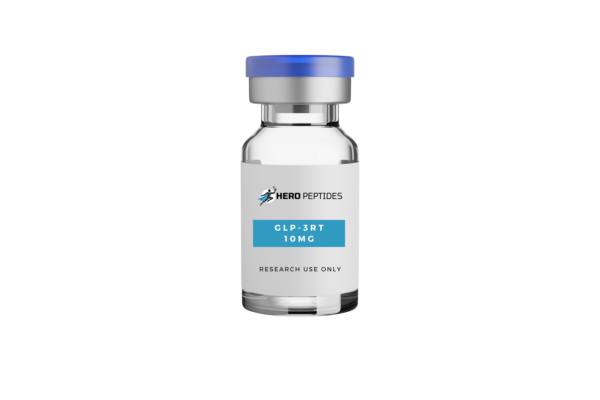
| Triple | GIP + GLP-1 + glucagon | Retatrutide | Investigational, FDA filing planned Q1 2027 | Hero RT |
In head-to-head testing, tirzepatide produced greater weight reduction than semaglutide (Aronne et al., 2025). Retatrutide’s phase 3 results are larger again, though a direct comparison with tirzepatide is still running.
Beyond incretins: amylin
A fourth hormone is joining the team. Amylin is released from beta cells alongside insulin and slows gastric emptying and signals fullness through different brain pathways. Cagrilintide, a long-acting amylin analog (Hero CG), is being studied with semaglutide in the combination known as CagriSema.
FAQ
Is GIP the same as GLP-1?
No. They’re both incretin hormones that increase insulin after a meal, but they come from different gut cells, act through different receptors and have different effects on fat tissue and the brain.
Why would a metabolic compound activate glucagon?
Glucagon receptor activation increases energy expenditure and liver fat burning. Combined with GLP-1 and GIP, its glucose-raising effect is offset.
Which is stronger: dual or triple agonists?
Published phase 3 data so far show larger effects for the triple agonist retatrutide than for tirzepatide, but the trials differ. TRIUMPH-5 will compare them directly.
References
- Campbell JE, Drucker DJ. Pharmacology, physiology, and mechanisms of incretin hormone action. Cell Metab. 2013;17(6):819-837.
- Müller TD, et al. Glucagon-like peptide 1 (GLP-1). Mol Metab. 2019;30:72-130.
- Drucker DJ. Mechanisms of action and therapeutic application of glucagon-like peptide-1. Cell Metab. 2018;27(4):740-756.
- Coskun T, et al. LY3437943, a novel triple glucagon, GIP, and GLP-1 receptor agonist for glycemic control and weight loss: From discovery to clinical proof of concept. Cell Metab. 2022;34(9):1234-1247.
- Aronne LJ, et al. Tirzepatide as compared with semaglutide for the treatment of obesity. N Engl J Med. 2025;393(1):26-36.
For laboratory research use only. Not for human or veterinary use. This article summarizes published research and is not medical advice.