

Peptide Albumin Binding: What Acylation Adds to the Design
Explore how fatty-acid modifications can promote albumin association, why binding and receptor activity are separate, and how assay conditions affect interpretation.
| Albumin | A major plasma protein used in exposure-extension strategies |
|---|---|
| Acylation | Addition of an acyl-containing chemical group |
| Key variables | Attached group, linker, position, and complete structure |
| Measurement distinction | Total concentration versus unbound concentration |
| Evidence boundary | Albumin association does not establish universal stability or potency |
| Hero product | Hero SM |
Peptide albumin binding is one strategy used to change how a molecule behaves in a biological system. Attaching a suitable fatty-acid-containing group can encourage association with albumin, a major plasma protein. The peptide’s complete design still determines the resulting behavior.
This is more specific than saying that a fatty chain makes a peptide last longer. Researchers must examine albumin association, receptor activity, and exposure separately. A design can improve one property while changing another, so the balance matters.
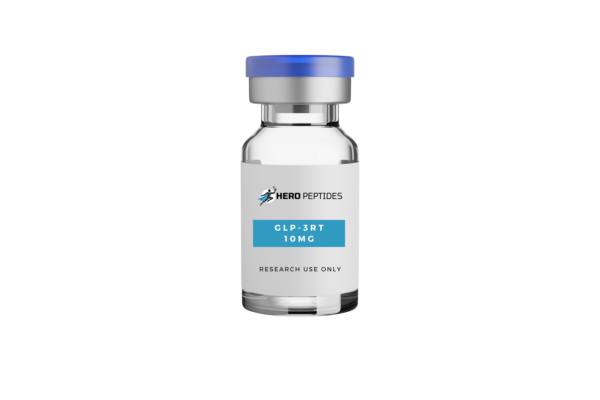
Origin story: adding chemistry beyond the peptide chain
Knudsen and colleagues investigated fatty-acid-derivatized GLP-1 analogs in an early long-acting development program. Their work linked chemical changes with potency and pharmacokinetic properties, illustrating the need to evaluate the whole molecule (Knudsen et al., 2000).
Semaglutide’s later discovery program explored an albumin-binding side chain together with other structural changes. The resulting design was selected through experimental comparisons rather than by assuming that any attached lipid would have the same effect (Lau et al., 2015).
The peptide structure guide introduces modifications as part of identity. In this setting, the attachment is not an incidental ingredient mixed into a vial. It is part of the chemically defined molecule.
How peptide albumin binding works
For lipidated designs such as these, albumin association is reversible. Bound and unbound material can exchange. An exposure measurement reporting total peptide therefore does not necessarily describe the unbound concentration at the same moment.
The fatty-acid-containing group, its attachment position, and the linker belong to the design. Changing one can change more than albumin association. Receptor interaction and other properties still need direct comparison with a suitable reference (Knudsen et al., 2000; Lau et al., 2015).
Tirzepatide provides another example of a fatty-acid-modified peptide. Its discovery paper investigated the engineered dual agonist as a complete molecule. The common use of a lipid modification does not make tirzepatide and semaglutide identical in receptor profile or exposure (Coskun et al., 2018).
Also distinguish reversible lipid-mediated association from other albumin strategies. Early CJC-1295 research used a construct designed to attach chemically to albumin. The shared protein partner does not mean the chemistry is interchangeable (Jetté et al., 2005).
Key evidence: binding, activity, and exposure need separate columns
| Research question | Relevant measurement | What it cannot establish alone |
|---|---|---|
| Does the material associate with albumin? | Suitable binding assessment | Receptor activity or complete exposure profile |
| Does it activate the intended receptor? | Defined functional assay | Persistence in a whole organism |
| How long does material remain measurable? | Concentration-time study | Duration of every biological effect |
| What reaches the assay in unbound form? | Appropriate unbound-concentration assessment | Every tissue’s exposure |
Semaglutide’s discovery work compared albumin-related and receptor properties within the design program. This matters because optimizing one interaction is not automatically the same as optimizing the final molecule’s behavior (Lau et al., 2015).
For a clinical-product example, Zepbound’s prescribing information reports high plasma albumin binding for tirzepatide. That measurement belongs to its stated context. It is not a fixed binding fraction that can be copied into every cell-assay medium (Eli Lilly, accessed 2026).
Albumin concentration and the composition of the experimental medium therefore belong in the methods record. Comparing assays with different protein environments can introduce another variable even when the same nominal peptide concentration is added.
A hypothetical example helps separate the quantities. A total concentration of 100 arbitrary units with an assumed unbound fraction of 1% would give one unbound unit under that assumption. It does not show that a real sample has that fraction or establish its receptor response.
Weak spots: what we don’t know
Total concentration should not be called free concentration. Nor should strong binding be described as permanent sequestration. The interpretation needs the actual measurement and a model appropriate to the experimental system.
Binding to a plasma protein also does not prove long-term stability in a laboratory vial. The vehicle, container, and storage conditions are different questions. Adding albumin to an assay or stock is not a universal preparation recommendation.
The half-life guide explains how measured persistence differs from effect duration. Albumin association can be part of an exposure strategy, but the overall result must be measured rather than assigned from the modification alone.
As of November 5, 2026, approved semaglutide and tirzepatide medicines exist. Their product-specific evidence does not establish approval or clinical equivalence for research vials with related compound names (FDA, 2021; FDA, 2023).
Handling albumin-binding peptide questions in the lab
Document the complete material identity and the assay medium. Include albumin or other protein components where relevant, rather than noting only the buffer name. Keep total added concentration separate from any measured unbound value.
For stock arithmetic, a nominal 5 mg sample recovered at a final volume of 2 mL gives 2.5 mg/mL, or 2,500 mcg/mL. A 0.10 mL analytical aliquot contains a nominal 250 mcg. That is the mass transferred, not a measurement of its binding distribution.
If the portion is diluted into another medium, calculate the new total concentration and record the resulting vehicle composition. Do not infer an unbound fraction simply from the amount transferred or from a percentage reported in a different biological setting.
The reconstitution guide and calculator support the arithmetic. They cannot calculate protein binding from vial size or substitute for a suitable binding measurement.
Peptide albumin binding FAQ
Does acylation mean mixing free fatty acid into a peptide solution?
No. In the designs discussed here, the chemical group is attached as part of the molecule.
Are total and unbound concentrations identical?
No. They describe different quantities when binding is present.
Does albumin association prove solution shelf life?
No. A stored preparation needs evidence for its own formulation and conditions.
What is Hero SM?
Hero SM is Hero Peptides’ semaglutide research material, listed in 5 mg and 10 mg vials. Its identity and assay conditions should be documented separately from approved-product evidence.
References
- Knudsen LB, et al. Potent derivatives of glucagon-like peptide-1 with pharmacokinetic properties suitable for once daily administration. J Med Chem. 2000;43(9):1664-1669. Source.
- Lau J, et al. Discovery of the Once-Weekly Glucagon-Like Peptide-1 (GLP-1) Analogue Semaglutide. J Med Chem. 2015;58(18):7370-7380. Source.
- Coskun T, et al. LY3298176, a novel dual GIP and GLP-1 receptor agonist for the treatment of type 2 diabetes mellitus: From discovery to clinical proof of concept. Mol Metab. 2018;18:3-14. Source.
- Jetté L, et al. Human growth hormone-releasing factor (hGRF)1-29-albumin bioconjugates activate the GRF receptor on the anterior pituitary in rats: identification of CJC-1295 as a long-lasting GRF analog. Endocrinology. 2005;146(7):3052-3058. Source.
- Eli Lilly and Company. Zepbound (tirzepatide), prescribing information, section 12.3. DailyMed, accessed November 5, 2026. Source.
- U.S. Food and Drug Administration. Wegovy (semaglutide), NDA 215256, approval review. 2021. Source.
- U.S. Food and Drug Administration. Zepbound (tirzepatide), NDA 217806, approval package. 2023. Source.
For laboratory research use only. Not for human or veterinary use. This article summarizes published research and is not medical advice.