

What Are Peptides? Structure, Signals, and Research Tools
Learn how amino-acid building blocks become peptides, why small structural changes matter, and which questions researchers ask about identity, activity, and amount.
| Chemical foundation | Amino-acid residues joined through peptide linkages |
|---|---|
| Sequence | The order of residues in the chain |
| Structure variables | Length, residue identity, and chemical modifications |
| Biological role | Specific to the molecule and experimental context |
| Laboratory distinction | Identity, purity, amount, and activity are separate attributes |
| Hero product | Ipamorelin |
What are peptides? They are molecules made from amino-acid building blocks connected through peptide linkages. Their sequence and chemical structure can vary widely. That shared construction does not give every peptide the same function or biological behavior.
Some peptides are studied as signals, some as receptor-directed tools, and others as analytical standards. Understanding the structure behind the name helps explain why one peptide’s results cannot stand in for another’s, even when both arrive in similar laboratory vials.
Origin story: from amino acids to a connected molecule
IUPAC defines peptides through the linkage of amino-acid-derived units. The peptide bond joins the carbonyl carbon of one unit with the nitrogen of another. The connected units are called residues because their chemical form in the chain differs from that of the separate starting amino acids (IUPAC, 2025; IUPAC, accessed 2026).
This vocabulary makes sequence descriptions easier to read. A five-residue peptide has five connected amino-acid units. A sequence gives their order, rather than only counting how many are present.
Order matters as an identifier. A list of ingredients is not the same as a defined sequence, just as knowing the letters in a word does not establish their order. Laboratory documentation should preserve both residue identity and arrangement.
How peptide structure is built
A peptide chain has a direction, conventionally described from its amino end toward its carboxyl end. Reports may also specify terminal modifications, side-chain changes, or other attached groups. Those features belong to the material’s identity rather than optional labeling detail.
Length is one useful description, but it does not explain function by itself. Researchers also need the sequence, chemical modifications, and molecular form. Two materials with the same residue count can be different compounds.
Consider ipamorelin. Its discovery paper describes a synthetic pentapeptide and investigates its growth-hormone-secretagogue behavior in laboratory and animal models. Five residues is its length description; the defined structure is what identifies the molecule used in those experiments (Raun et al., 1998).
Semaglutide provides another design example. Its discovery program investigated an engineered GLP-1 analog with changes related to enzymatic resistance and albumin binding. Such chemical modifications are part of why a molecule’s name and structure must stay connected in research summaries (Lau et al., 2015).
Key examples: one chemical family, different research questions
| Example | Structural or analytical context | Research question | Interpretation boundary |
|---|---|---|---|
| Ipamorelin | Defined synthetic pentapeptide | Secretagogue activity and hormone selectivity | Retain the model and measured endpoint |
| Semaglutide | Engineered GLP-1 analog | Receptor-directed molecular design | Do not infer behavior from length alone |
| Tirzepatide | Single engineered dual agonist | GIP and GLP-1 receptor activity | Multiple targets do not mean a blend |
| Peptide reference material | Characterized analytical sample | Mass, purity, and measurement performance | Analytical suitability is purpose-specific |
The biological examples come from distinct development studies. Tirzepatide’s discovery work investigated one peptide with activity at two receptor types. That is different from putting two separate peptide ingredients in the same container (Raun et al., 1998; Lau et al., 2015; Coskun et al., 2018).
The receptor explainer develops those target distinctions. A receptor is part of the experimental mechanism, while a peptide’s sequence and modifications describe the material. Both are needed to connect a molecule with an observed response.
Analytical standards answer another kind of question. NIST’s peptide reference-material report separates molecular-mass information from area purity and peptide mass purity. Those categories show why identifying a peptide is not the same task as quantifying it (NIST, 2007).
For a new research question, begin with what needs to be learned. A receptor assay, a content measurement, and a stability assessment may use related material but require different controls and methods. The chemical family name does not decide the experiment.
Weak spots: what the word peptide does not tell us
Peptide is a structural category, not a promise of effectiveness or safety. A result belongs to the actual molecule, model, exposure conditions, and endpoint studied. Shared building blocks do not make every member interchangeable.
The term also does not establish purity, sterility, content, or stability. Those are separate quality questions. A vial can be correctly identified as containing a peptide while still needing additional characterization for its intended experiment.
Regulatory status is molecule- and product-specific. As of November 5, 2026, FDA-approved peptide medicines exist, including tirzepatide products, while ipamorelin is not an FDA-approved human medicine. A research supplier’s vial does not inherit another product’s approval (FDA, 2023; FDA, 2026).
Finally, mass and biological activity are different quantities. The same microgram amount of two peptides does not establish equal numbers of molecules, receptor occupancy, or biological response. Choose comparison units around the actual research question.
Handling peptide identity and concentration in the lab
Start a material record with the compound identifier, sequence or structural reference, lot, content basis, and analytical documentation. Add the vehicle and final volume when preparing a stock. Keep the stock’s record linked to every working dilution.
For an arithmetic example, a nominal 10 mg sample brought to a final solution volume of 2 mL gives 5 mg/mL, or 5,000 mcg/mL. A 0.10 mL analytical aliquot contains a nominal 500 mcg, assuming complete recovery.
That calculation describes mass per volume. Converting to molar concentration requires the documented molecular weight and an appropriate content basis. It still does not assign biological activity without a relevant measurement.
The reconstitution guide and calculator help with arithmetic. The testing guide explains why identity, purity, and amount need separate interpretation.
What are peptides FAQ
Are all peptides naturally occurring?
No. Researchers also investigate synthetic and chemically modified peptides, including the development examples discussed here.
Does sequence length determine a peptide’s function?
No. Residue identity, order, modifications, and experimental context also matter.
Does dual agonist mean two peptides mixed together?
Not in the tirzepatide example. One engineered peptide supplies activity at two receptor types (Coskun et al., 2018).
What is Hero Ipamorelin?
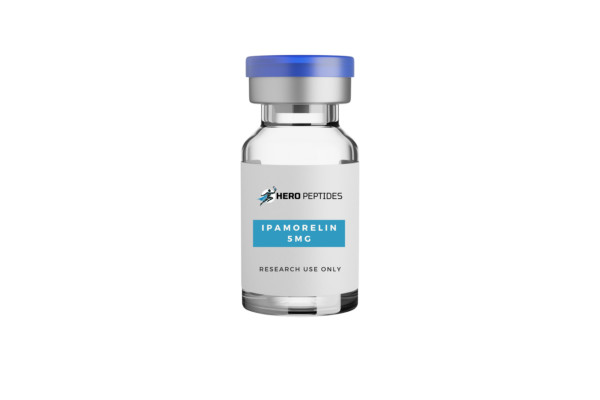
Hero Ipamorelin is the catalog’s ipamorelin research material, listed in a 10 mg vial. Its matching documentation should establish identity and the content basis used in laboratory calculations.
References
- International Union of Pure and Applied Chemistry. Peptides. Compendium of Chemical Terminology, 5th ed. 2025. Source.
- International Union of Pure and Applied Chemistry. Amino-acid residue. Compendium of Chemical Terminology. Accessed November 5, 2026. Source.
- Raun K, et al. Ipamorelin, the first selective growth hormone secretagogue. Eur J Endocrinol. 1998;139(5):552-561. Source.
- Lau J, et al. Discovery of the Once-Weekly Glucagon-Like Peptide-1 (GLP-1) Analogue Semaglutide. J Med Chem. 2015;58(18):7370-7380. Source.
- Coskun T, et al. LY3298176, a novel dual GIP and GLP-1 receptor agonist for the treatment of type 2 diabetes mellitus: From discovery to clinical proof of concept. Mol Metab. 2018;18:3-14. Source.
- National Institute of Standards and Technology. Reference Material 8327: Peptide Reference Material for Molecular Mass and Purity Measurements. Archived report of investigation, March 19, 2007. Source.
- U.S. Food and Drug Administration. Zepbound (tirzepatide), NDA 217806, approval package. 2023. Source.
- U.S. Food and Drug Administration. Certain Bulk Drug Substances for Use in Compounding that May Present Significant Safety Risks. Content current as of April 22, 2026. Accessed November 5, 2026. Source.
For laboratory research use only. Not for human or veterinary use. This article summarizes published research and is not medical advice.