

How to Store Peptides: Powder, Solutions, and Lab Records
Build a storage plan around the actual material, formulation, and container, with clear records for dry vials, prepared stocks, and temperature excursions.
| Starting point | Lot-specific storage documentation |
|---|---|
| Material states | Lyophilized powder, stock solution, working dilution |
| Important variables | Temperature, moisture, light, container, and formulation |
| Required record | Identity, lot, preparation date, and storage history |
| Evidence boundary | No universal temperature or expiry for every peptide |
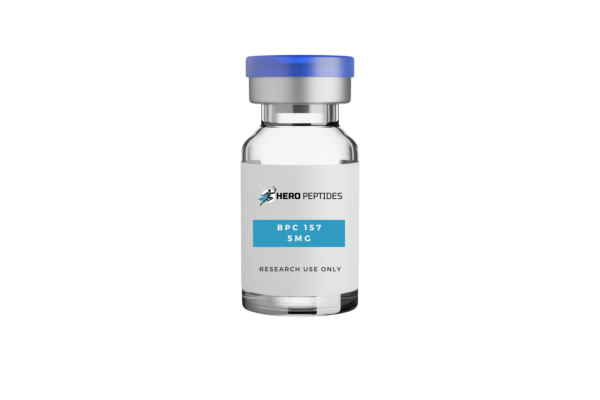
| Hero product | BPC-157 |
How to store peptides starts with the material in front of you. A sealed dry vial, a concentrated stock, and a diluted working solution are different storage problems. One temperature rule cannot answer all three without knowing the peptide and formulation.
A useful storage plan keeps the documentation, container, and sample history together. The goal is to preserve a material’s suitability for the experiment and make any change traceable. Cold storage helps only when it is appropriate to the specific preparation.
Origin story: why peptide storage is more than refrigeration
Peptide standards became important tools for quantitative assays, where a change in recoverable material can look like a change in biology. Research on assay peptides has examined concentration, container choice, and repeated freeze-thaw exposure, showing why handling belongs in the analytical record (Hoofnagle et al., 2016).
Drug stability guidance uses a related principle: storage claims should come from evidence about change over time under stated conditions. Temperature, humidity, and light are examples of the variables considered. The principle is useful for research planning, although a drug-registration framework is not a product-specific storage instruction (ICH, 2003).
Begin by identifying the state of the material. Has the vial remained sealed? Has solvent been added? Has the stock been diluted? Each change creates a new entry in the sample history, even when the compound name stays the same.
How a peptide storage plan works
For a dry material, first find the supplier’s documented temperature range and any moisture or light precautions. Keep the original vial identity visible. A freezer box label should support the vial label, not replace it with a name that can be lost when the vial moves.
Moisture control matters when opening cold dry materials. Sigma-Aldrich’s handling guide advises letting a closed cold container reach room temperature before opening to reduce moisture uptake from the surrounding air. Apply such guidance in the context of the material’s own instructions (Sigma-Aldrich, accessed 2026).
For a prepared stock, record the solvent, final concentration, container, and preparation date. A label reading BPC-157 in water leaves important gaps. It omits whether a preservative or buffer is present and whether the concentration is nominal or analytically measured.
For working dilutions, track the parent stock and dilution separately. This prevents a short-lived working preparation from inheriting an unsupported date from a different stock. Small labels can use a sample identifier linked to a fuller electronic record.
Key evidence: match the storage question to the measurement
| Material or event | What to record | Question to resolve |
|---|---|---|
| Sealed lyophilized vial | Lot, seal status, labeled range, receipt date | Were the supplied conditions maintained? |
| Prepared stock | Solvent, concentration, container, date | Is there evidence for this preparation? |
| Working dilution | Parent stock, dilution, assay vehicle | Does the preparation remain suitable during the experiment? |
| Temperature excursion | Range, duration, material state | Does supporting evidence cover the event? |
Container choice can change recovery. Kristensen and colleagues used HPLC to study three cationic peptides in glass and plastic containers and observed substantial surface adsorption under some tested conditions. These were specific model peptides, not a measurement of every Hero catalog compound (Kristensen et al., 2015).
The practical lesson is to evaluate recovery when a container change matters to the assay. A lower measured concentration may reflect material at a surface rather than only chemical breakdown. A different tube should be treated as a variable worth documenting.
Reference-standard work also treats storage as something to test and track. McCarthy and colleagues describe stability evaluation for characterized peptide materials using defined temperatures and time points. That supports disciplined records, not borrowing the study’s dates for unrelated research lots (McCarthy et al., 2023).
For inventory management, group materials by their documented conditions, not simply by peptide name. Keep frequently accessed working materials distinguishable from reserve stocks. Any subdivision should preserve identity and use containers and conditions supported for that preparation.
Weak spots: what we don’t know
There is no defensible universal shelf life for all research peptides. Sequence, formulation, concentration, and container can differ. Even a genuine result for one compound does not establish the same result for a different salt form or solvent.
A clear solution is also not a stability test. It cannot establish retained content or activity. Visible clouding or a changed appearance may flag a problem, but an unchanged appearance does not rule out changes an analytical method could detect.
As of November 5, 2026, BPC-157 remains an unapproved research compound in the United States. In April 2026, FDA moved BPC-157 from its category 2 compounding list to its list of nominations withdrawn by the nominators, though that page still records the agency’s safety concerns. That change is not a drug approval. FDA identifies limited safety information. Storage conditions do not change that regulatory status or turn a research material into an approved medicine (FDA, 2026).
If an excursion occurs, preserve the facts before deciding what it means. A note saying warm overnight is hard to evaluate. Measured temperature, elapsed time, formulation, and container status make a meaningful review possible.
Handling peptide stocks in the lab
Keep preparation math next to the storage record. A nominal 5 mg vial brought to a final solution volume of 2 mL yields 2.5 mg/mL, or 2,500 mcg/mL. A 0.10 mL analytical aliquot contains 250 mcg at preparation, assuming the declared content and complete recovery.
That calculation does not prove what remains after storage. If recovery later matters, measure it with an appropriate method. Do not silently carry the original nominal concentration forward after an unresolved handling event.
On a U-100 volume scale, 10 units represent 0.10 mL. For laboratory records, express the actual volume and concentration as well as any instrument scale used. This makes the entry understandable without relying on a particular device.
Use the reconstitution guide and calculator for concentration checks. The reconstituted shelf-life guide explains why the preparation date and a supported use period are separate pieces of information.
Peptide storage FAQ
Should every peptide go into a freezer?
No universal setting fits every preparation. Follow documented conditions for the specific material, formulation, and container.
Does a freeze-thaw event always destroy a peptide?
No universal conclusion follows from one event. Evaluate the actual preparation and the evidence covering its handling history.
Can storage dates be copied from an approved medicine?
No. A different formulation or package may have different stability evidence, even when the active compound name matches.
What is Hero BPC-157?
Hero BPC-157 is the catalog’s BPC-157 research material, available in 5 mg and 10 mg vials. Use the supplied lot documentation as the starting point for its storage record.
References
- Hoofnagle AN, et al. Recommendations for the Generation, Quantification, Storage, and Handling of Peptides Used for Mass Spectrometry-Based Assays. Clin Chem. 2016;62(1):48-69. Source.
- International Council for Harmonisation. Q1A(R2): Stability Testing of New Drug Substances and Products. 2003. Source.
- Sigma-Aldrich. Peptide Handling Guide. Technical guidance, accessed November 5, 2026. Source.
- Kristensen K, et al. Adsorption of Cationic Peptides to Solid Surfaces of Glass and Plastic. PLoS One. 2015;10(5):e0122419. Source.
- McCarthy D, et al. Reference Standards to Support Quality of Synthetic Peptide Therapeutics. Pharm Res. 2023;40(6):1317-1328. Source.
- U.S. Food and Drug Administration. Certain Bulk Drug Substances for Use in Compounding that May Present Significant Safety Risks. Content current as of April 22, 2026. Accessed November 5, 2026. Source.
For laboratory research use only. Not for human or veterinary use. This article summarizes published research and is not medical advice.