

How Long Do Reconstituted Peptides Last? Read the Evidence
Separate chemical stability, recoverable content, microbial quality, and activity when deciding whether evidence supports a reconstituted peptide’s laboratory use period.
| Universal shelf life | Not established across all research peptides |
|---|---|
| Chemical stability | Requires suitable analytical evidence |
| Microbial quality | Separate from chemical integrity |
| Activity | May require a functional assay |
| 28-day rule | Medication-vial handling guidance, not universal peptide stability |
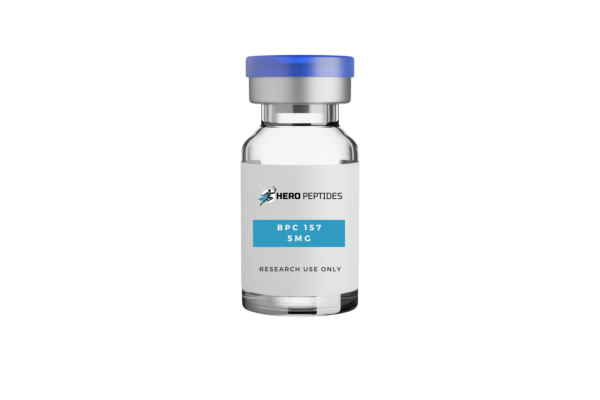
| Hero product | BPC-157 |
How long do reconstituted peptides last? The useful answer is a supported period for a specific preparation, not one number for every vial. Peptide identity, solvent, concentration, container, temperature, and handling history all belong in the question.
There are several different meanings of last. A sample may remain clear while its recoverable content changes. A chemical assay may look acceptable without establishing microbial quality. A sound shelf-life claim states what was measured and the conditions under which the result applies.
Origin story: where the common countdown comes from
The widely repeated 28-day number has a defined context. CDC describes a default interval for opened multiple-dose medication vials unless their manufacturer specifies another date. It is a handling rule for those products, not a universal experiment on reconstituted research peptides (CDC, 2024).
Once water is mixed with a separate research material, the resulting preparation has its own composition and history. The water’s label cannot answer every question about the new mixture. A preserved vehicle does not supply missing data on peptide integrity.
This is why dates need descriptive labels. Receipt date, preparation date, retest date, and a supported end-of-use date mean different things. A date without its meaning can create more confidence than the underlying evidence warrants.
How a shelf-life claim works
A stability claim links a preparation to a measurement over time. It should identify the material and formulation, define storage conditions, and state the criteria used to judge change. Without those details, a statement such as stable for a month is difficult to apply.
Drug stability guidance illustrates this approach by relating quality over time to environmental conditions and storage recommendations. Research teams can use the same basic logic without pretending that a general guideline supplies data for their particular vial (ICH, 2003).
Define the endpoint first. Are you tracking intact peptide, concentration in solution, visible particles, or a functional response? A single method may address one of those well while leaving the others unresolved. Choose the measurement around the intended experiment.
Also define the starting point. Comparison with an initial measurement is more informative than comparison with a nominal label amount alone. If the initial preparation has incomplete recovery, later results need to be interpreted against that baseline.
Key evidence: four questions behind one expiry date
| Question | Possible evidence | What it does not automatically prove |
|---|---|---|
| Is the expected chemical species retained? | Suitable stability-indicating analytical method | Microbial quality or biological activity |
| How much remains recoverable? | Validated content or concentration measurement | Where any missing material went |
| Has microbial quality changed? | Appropriate microbiological assessment | Chemical integrity |
| Does the material still perform in the assay? | Relevant functional test | Absence of every contaminant |
Published formulation experiments demonstrate why ingredients matter. Pohl and colleagues developed specific liquid glucagon formulations with selected excipients and evaluated their behavior. The results support those tested systems, rather than a general expiry for glucagon-related peptides in plain or preserved water (Pohl et al., 2015).
Loss from solution also need not mean only chemical degradation. Kristensen and colleagues measured surface adsorption for cationic model peptides in common containers. Their work shows why container recovery can be a separate analytical question (Kristensen et al., 2015).
For assay peptides, Hoofnagle and colleagues examined handling variables including repeated freeze-thaw exposure. The findings were sequence-dependent. That is a reason to evaluate the actual material, not a basis for claiming all peptides either tolerate or fail after the same number of cycles (Hoofnagle et al., 2016).
A useful evidence summary therefore includes what was tested, how it was tested, and what was considered acceptable. If a report covers only one solvent or container, keep that limitation attached when discussing its result.
Weak spots: what we don’t know
When matching stability data are unavailable, the shelf life is unestablished. That does not prove the sample instantly fails or indefinitely lasts. It means a precise countdown would go beyond the evidence.
Refrigeration is a condition, not a test result. Recording that a stock was kept cold is useful, but it does not show how much intact peptide remains. The same applies to a sealed appearance, a clear solution, or a preserved diluent.
Accelerated stress results also need interpretation. A test at one elevated temperature may reveal a degradation risk, but converting it into a storage period requires supporting methods and assumptions. Avoid turning a stress-test observation into an unsupported expiry.
As of November 5, 2026, BPC-157 is not an FDA-approved human medicine, and FDA identifies limited safety information. In April 2026, FDA moved BPC-157 from its category 2 compounding list to its list of nominations withdrawn by the nominators, though that page still records the agency’s safety concerns. That change is not a drug approval. A laboratory stability result would address its tested quality attributes, rather than establish clinical approval or safety (FDA, 2026).
Handling reconstituted peptides in the lab
Create a preparation record that includes identity, lot, solvent, final volume, concentration basis, container, and date. Add the intended storage condition and the evidence supporting any use period. Keep excursions and transfers in the same history.
For a math example, a nominal 10 mg sample brought to a final volume of 2 mL gives 5 mg/mL. That equals 5,000 mcg/mL, so a 0.10 mL analytical aliquot initially contains a nominal 500 mcg.
If a suitable later measurement shows 90% recovery relative to the initial value, the recoverable concentration would be 4.5 mg/mL, assuming unchanged volume. The corresponding 0.10 mL aliquot would contain 450 mcg. This is hypothetical arithmetic, not a predicted loss rate or acceptance criterion.
The reconstitution guide and calculator help verify concentration. For storage records, see how to store peptides. Keep measured results separate from nominal calculations so the record makes clear which is which.
Reconstituted peptide shelf-life FAQ
Is 28 days the shelf life of every peptide solution?
No. The medication-vial handling guidance does not validate every research peptide preparation (CDC, 2024).
Does a clear solution mean the peptide is intact?
No. Appearance alone does not establish chemical integrity, recoverable content, microbial quality, or activity.
What if no matching stability study is available?
State that the use period is unestablished and seek material-specific evidence. Do not invent an exact expiry from a different formulation.
What is Hero BPC-157?
Hero BPC-157 is Hero Peptides’ BPC-157 research material in 5 mg and 10 mg vials. Its prepared solutions require their own documented formulation and handling history.
References
- Centers for Disease Control and Prevention. Preventing Unsafe Injection Practices. 2024. Accessed November 5, 2026. Source.
- International Council for Harmonisation. Q1A(R2): Stability Testing of New Drug Substances and Products. 2003. Source.
- Pohl R, et al. Development of Stable Liquid Glucagon Formulations for Use in Artificial Pancreas. J Diabetes Sci Technol. 2015;9(1):8-16. Source.
- Kristensen K, et al. Adsorption of Cationic Peptides to Solid Surfaces of Glass and Plastic. PLoS One. 2015;10(5):e0122419. Source.
- Hoofnagle AN, et al. Recommendations for the Generation, Quantification, Storage, and Handling of Peptides Used for Mass Spectrometry-Based Assays. Clin Chem. 2016;62(1):48-69. Source.
- U.S. Food and Drug Administration. Certain Bulk Drug Substances for Use in Compounding that May Present Significant Safety Risks. Content current as of April 22, 2026. Accessed November 5, 2026. Source.
For laboratory research use only. Not for human or veterinary use. This article summarizes published research and is not medical advice.