

Peptide Shipping Temperature: How to Assess a Delivery
Assess peptide deliveries using documented conditions, transit records, and material-specific stability evidence rather than the temperature of a cooling pack alone.
| Main question | Was the material within supported transport conditions? |
|---|---|
| Key evidence | Time, temperature history, packaging, and material state |
| Cooling-pack limit | Arrival appearance does not reconstruct transit history |
| Excursion review | Requires evidence relevant to the specific material |
| Storage versus transport | Conditions may differ only when supporting evidence allows |
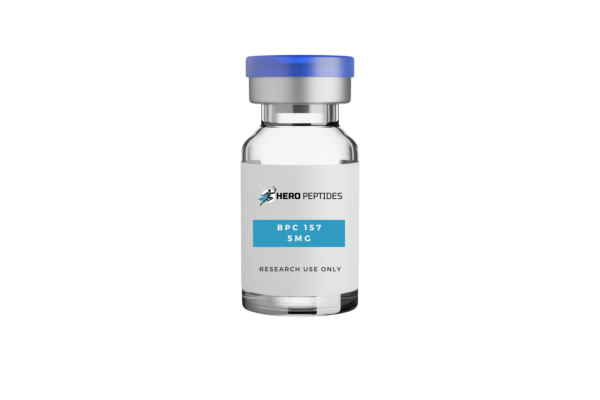
| Hero product | BPC-157 |
Peptide shipping temperature cannot be judged from a cooling pack alone. A thawed pack does not reveal the vial’s complete temperature history. A cold pack at arrival also does not prove that every part of transit stayed within a supported range.
A useful delivery assessment combines material identity, packaging, transit time, any temperature record, and stability evidence. This guide explains what those pieces can establish and which conclusions remain unsupported when important information is missing.
Origin story: why transport is a separate stability question
Pharmaceutical distribution guidance treats transport as a controlled part of a product’s history. WHO’s model guidance addresses storage and distribution of time- and temperature-sensitive pharmaceutical products. Its principles connect packaging, monitoring, and documented conditions (WHO, 2011).
These documents provide a framework for asking better questions. They do not establish a shipping limit for a particular Hero research lot or certify that any specific shipment followed a qualified process. Material-specific evidence is still needed.
The distinction between storage and transport matters. A stated long-term storage condition does not automatically describe every acceptable short transit exposure. Conversely, an acceptable transport interval does not establish an unlimited storage period after delivery.
How a shipping-temperature assessment works
First, identify the material and its state. A sealed lyophilized sample and a prepared solution are different preparations. A result established for one should not be silently applied to the other.
Next, identify the supported range and duration. Health Canada’s guidance states that transport conditions should follow labeling or be supported by appropriate evidence, and that an excursion needs scientific justification. That is an evidence principle, not a universal tolerance for peptides (Health Canada, 2020).
Then examine the actual history. A data logger can provide a temperature series at its measurement location. The timing, placement, calibration, and relation to the material affect what that record supports. A tracking page supplies delivery events rather than the vial’s temperature.
Finally, connect the observation to an evaluation. Separate what is known from what is assumed. If there is no time-temperature record, do not replace the gap with an exact estimate based only on outdoor weather or the pack’s feel.
Key evidence: what each shipping observation means
| Information | What it supports | What remains unresolved |
|---|---|---|
| Carrier tracking | Recorded shipment events and elapsed transit | Material temperature between events |
| Cooling pack at arrival | Condition of that pack when inspected | Complete vial temperature history |
| Temperature logger | Recorded temperatures at the monitored location | Product impact without relevant stability evidence |
| Packaging qualification | Performance under tested shipping conditions | Unrepresented conditions or configurations |
| Material-specific stability data | Response under the tested conditions | Different formulations or unsupported exposure patterns |
The practical aim is to compare a documented exposure with evidence that actually covers it. Qualification of a packaging system is useful only within the conditions and configuration it represents. Monitoring and stability information answer complementary questions (WHO, 2011).
Stability guidance also distinguishes change over time from an isolated temperature reading. ICH Q1A(R2) frames stability evaluation around quality under environmental influences such as temperature, humidity, and light. The same logic helps prevent an arrival snapshot from becoming a complete stability claim (ICH, 2003).
Consider two hypothetical records. One reports an arrival temperature but no transit history. The other includes a time series and matching material evidence for the observed range. The second supports a more specific evaluation, even if both packages look identical.
When contacting the supplier about a delivery, provide the lot, transit dates, packaging condition, seal status, and any logger record. Ask which transport evidence applies to that material. A focused question is easier to answer than whether warm peptides are always fine.
Weak spots: what we don’t know
There is no single supported warm-transit interval for every peptide. Identity, formulation, moisture, container, and exposure history can differ. A general statement about dry peptides cannot establish that a particular shipment remained suitable.
A low temperature is not automatically a better condition either. The target is the range supported for the specific preparation. Avoid inventing a requirement to freeze material when its documentation does not establish that need.
Health Canada’s guidance calls for evidence-based evaluation of excursions. It does not make an average temperature sufficient for every material or exposure. Preserve peaks, durations, and the original record rather than reducing the history to one reassuring number (Health Canada, 2020).
As of November 5, 2026, BPC-157 is not an FDA-approved human medicine. In April 2026, FDA moved BPC-157 from its category 2 compounding list to its list of nominations withdrawn by the nominators, though that page still records the agency’s safety concerns. That change is not a drug approval. Transport quality and regulatory status are separate questions. A supported shipping assessment would not establish human safety or approval (FDA, 2026).
Handling delivered peptides in the lab
Link the receipt record to the lot and maintain the documented storage conditions while any delivery question is evaluated. Keep photographs or logger files with the record. Distinguish observed facts from assumptions about what happened before arrival.
After material is accepted for its intended experiment, preparation math still needs its own inputs. A nominal 10 mg sample recovered at a final volume of 2 mL gives 5 mg/mL, or 5,000 mcg/mL. A 0.10 mL analytical aliquot contains a nominal 500 mcg.
Those numbers do not confirm retained content after transit. If a relevant quantitative method establishes another recoverable amount, the calculation should use that value with its reporting basis. Arithmetic cannot independently clear an unresolved temperature excursion.
See the reconstitution guide and calculator for concentration checks. The storage guide and lyophilization explainer cover material states and records after delivery.
Peptide shipping temperature FAQ
Does a thawed cooling pack prove the peptide failed?
No. It does not establish the full exposure or its effect on the material.
Does a cold pack prove the entire shipment stayed within range?
No. Its arrival condition is only one observation.
Can a supplier’s stability study apply to every peptide?
No. Check whether the compound, formulation, packaging, and exposure conditions match.
What is Hero BPC-157?
Hero BPC-157 is the catalog’s BPC-157 research material in 5 mg and 10 mg vials. Request transport and handling documentation relevant to the particular supplied material.
References
- World Health Organization. Model guidance for the storage and transport of time- and temperature-sensitive pharmaceutical products. WHO Technical Report Series 961, Annex 9. 2011. Source.
- Health Canada. Guidelines for environmental control of drugs during storage and transportation (GUI-0069). August 2020. Source.
- International Council for Harmonisation. Q1A(R2): Stability Testing of New Drug Substances and Products. 2003. Source.
- U.S. Food and Drug Administration. Certain Bulk Drug Substances for Use in Compounding that May Present Significant Safety Risks. Content current as of April 22, 2026. Accessed November 5, 2026. Source.
For laboratory research use only. Not for human or veterinary use. This article summarizes published research and is not medical advice.