

Lyophilized Peptides Explained: What Freeze-Drying Changes
Understand the stages of freeze-drying, why formulation and residual moisture matter, and what a dry peptide vial can and cannot reveal by appearance.
| Lyophilization meaning | Freeze-drying |
|---|---|
| Main stages | Freezing, primary drying, and secondary drying |
| Primary drying | Removal of ice by sublimation |
| Secondary drying | Further removal of associated water |
| Key distinction | Dry appearance does not establish content, purity, or stability |
| Hero product | BPC-157 |
Lyophilized peptides are peptides supplied after freeze-drying, a process that removes water from a frozen preparation. The dry material may appear as a cake, film, or powder. That appearance describes its physical form, not its complete chemical or biological quality.
Understanding the process helps explain why formulation, moisture, packaging, and preparation records matter. It also prevents a common mistake: assuming that a dry vial has unlimited stability or that adding water restores every property without further checks.
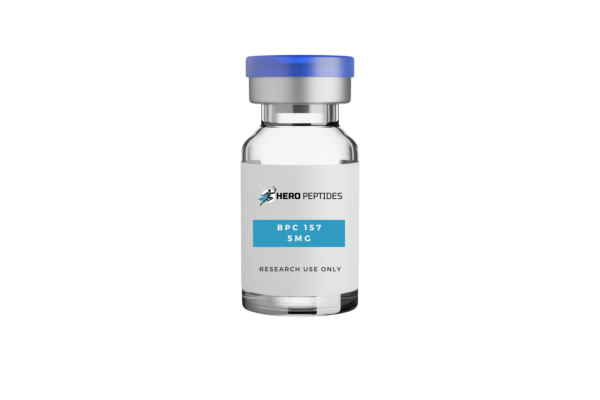
Origin story: why remove water from a preparation?
Freeze-drying is used in pharmaceutical and laboratory materials to produce a dry preparation from a solution or suspension. FDA’s inspection guide describes three linked stages: freezing, primary drying by sublimation, and secondary drying by desorption. Each stage affects the final material (FDA, 1993).
The useful question is what the process achieves for the specific formulation. A dry form can be part of a stability strategy, but its performance still needs evidence. The peptide, other ingredients, container, and process conditions all belong to that assessment.
This also explains why lyophilized is not a synonym for purified. Drying and analytical characterization are different tasks. A preparation does not gain a known identity or a verified amount simply because it has been dried.
How lyophilized peptides are made
During freezing, water in the preparation forms ice while other components occupy the remaining phases. Primary drying then removes ice as vapor under reduced pressure, rather than first melting it into a bulk liquid. Secondary drying removes additional associated water (FDA, 1993).
The resulting solid is the product of both composition and processing. A vial may include components other than the peptide, such as formulation ingredients or counterions. The visible size of the solid therefore does not establish the peptide amount.
Reconstitution introduces another formulation state. A solution made from the dry material has its own solvent composition, concentration, and handling history. It should not automatically inherit a storage period established for the sealed dry vial.
Keep those states distinct in an inventory. Sealed dry material, an opened dry vial, a prepared stock, and a working dilution should be identifiable. That makes later questions about moisture exposure or solution recovery easier to investigate.
Key evidence: process, composition, and measured quality
| Stage or attribute | What it describes | What it does not establish alone |
|---|---|---|
| Freezing | Formation of the frozen starting state | Successful removal of water |
| Primary drying | Removal of ice through sublimation | Zero residual moisture |
| Secondary drying | Further drying of the preparation | Universal long-term stability |
| Dry-vial appearance | Visible physical characteristics | Peptide identity, amount, or activity |
| Analytical testing | Defined quality attributes under stated methods | Every untested attribute |
The stage descriptions follow FDA’s process overview. The distinctions in the final column are the questions a researcher still needs to resolve through appropriate documentation or testing, rather than by inspecting the dry material alone (FDA, 1993).
Peptide-specific formulation experiments show why composition matters. Sahakijpijarn and colleagues studied CSP7 formulations and found that process and excipient choices affected counterion retention, reconstituted pH, and aggregation behavior. These findings concern the tested CSP7 systems, not every catalog peptide (Sahakijpijarn et al., 2019).
Reference-standard work likewise separates a material’s assigned amount from its physical form. McCarthy and colleagues describe characterized lyophilized peptide standards with analytical and stability evaluations. Their approach illustrates the evidence needed beyond a dry appearance (McCarthy et al., 2023).
For a report review, ask which quality attributes were actually measured. A moisture result, content assay, identity test, and chromatographic purity result answer different questions. Keep each result linked to its method and sample.
Weak spots: what we don’t know
A larger cake does not necessarily mean more peptide. A nearly invisible film does not necessarily mean an empty vial. Without a suitable content measurement, appearance cannot settle the amount present.
Drying also should not be treated as sterilization. The term lyophilized describes a process and physical state. Microbial quality requires appropriate controls and evidence rather than an inference from dryness.
Residual moisture is another attribute that appearance cannot quantify. A preparation may look dry while retaining water. Whether a measured level is acceptable depends on the material and supporting stability evidence, not a universal visual threshold.
As of November 5, 2026, BPC-157 remains unapproved as a human medicine in the United States. In April 2026, FDA moved BPC-157 from its category 2 compounding list to its list of nominations withdrawn by the nominators, though that page still records the agency’s safety concerns. That change is not a drug approval. Freeze-drying does not change that status or resolve the limited safety information identified by FDA (FDA, 2026).
Handling lyophilized peptides in the lab
Use the supplied material-specific storage conditions. For opening cold dry material, Sigma-Aldrich’s guide advises allowing the closed container to reach room temperature first to reduce moisture uptake. This general principle should remain consistent with the product’s own instructions (Sigma-Aldrich, accessed 2026).
Preserve the lot identifier and record any opening or preparation event. Keep the dry material’s history linked to the resulting stock. A date on the stock should identify preparation, not silently replace the original material’s history.
For concentration math, a nominal 5 mg peptide sample recovered at a final volume of 2 mL gives 2.5 mg/mL, or 2,500 mcg/mL. A 0.10 mL analytical aliquot contains a nominal 250 mcg. The calculation uses peptide amount, not cake volume or total visible solids.
Consult the reconstitution guide and calculator for arithmetic. The storage guide and COA guide explain the separate documentation needed for handling and analytical results.
Lyophilized peptides FAQ
Does lyophilized mean freeze-dried?
Yes. The term refers to a drying process involving a frozen preparation.
Does the size of the dry cake show the peptide amount?
No. Appearance and formulation ingredients prevent that inference.
Does a dry form establish unlimited shelf life?
No. A storage period needs evidence for the specific material, container, and conditions.
What is Hero BPC-157?
Hero BPC-157 is the catalog’s BPC-157 research material, listed in 5 mg and 10 mg vials. Its documentation should establish the material and handling requirements independently of appearance.
References
- U.S. Food and Drug Administration. Guide to Inspections of Lyophilization of Parenterals. July 1993. Source.
- Sahakijpijarn S, et al. Formulation Composition and Process Affect Counterion for CSP7 Peptide. Pharmaceutics. 2019;11(10):498. Source.
- McCarthy D, et al. Reference Standards to Support Quality of Synthetic Peptide Therapeutics. Pharm Res. 2023;40(6):1317-1328. Source.
- Sigma-Aldrich. Peptide Handling Guide. Technical guidance, accessed November 5, 2026. Source.
- U.S. Food and Drug Administration. Certain Bulk Drug Substances for Use in Compounding that May Present Significant Safety Risks. Content current as of April 22, 2026. Accessed November 5, 2026. Source.
For laboratory research use only. Not for human or veterinary use. This article summarizes published research and is not medical advice.