

BPC-157 vs TB-500: What the Research Actually Compares
Compare BPC-157 with the TB-500 fragment while separating cell and animal findings from full-length thymosin beta-4 studies and unsupported human claims.
| BPC-157 identity | Synthetic 15-amino-acid peptide |
|---|---|
| TB-500 identity | Thymosin beta-4-derived fragment; confirm exact structure |
| Key distinction | TB-500 is not full-length thymosin beta-4 |
| Evidence types | Cell, animal, and analytical studies |
| Clinical boundary | Neither is an FDA-approved human treatment |
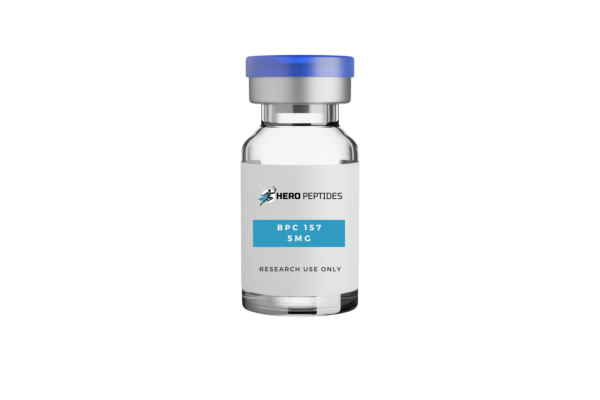
| Hero product | BPC-157 |
BPC-157 vs TB-500 often appears as a simple comparison of two tissue-research peptides. The first step is more basic: identify exactly which molecules are being compared. In particular, a paper about full-length thymosin beta-4 cannot automatically support a claim about the TB-500 fragment.
This guide separates peptide identity, model-specific findings, and unanswered questions. It also explains why shared research themes do not prove that two compounds are interchangeable, complementary, or effective together. A plausible biological story still needs direct evidence.
Origin story: two different research trails
BPC-157 is a synthetic pentadecapeptide, meaning it has 15 amino acids. One frequently cited tendon paper examined rat tendon explants and cultured fibroblasts. Its findings concern those experimental systems, rather than clinical injury recovery (Chang et al., 2011).
TB-500 has a different history. An analytical study identified N-acetylated LKKTETQ, a seven-residue segment from thymosin beta-4, in a TB-500 preparation and investigated its detection in equine samples. That paper established chemical and analytical information, not a human treatment effect (Ho et al., 2012).
The distinction is easy to lose because online material uses related names loosely. Keep the sequence, terminal modifications, and full-length or fragment designation attached to every citation. A familiar label is not enough to connect a vial to a study.
The BPC-157 research guide and TB-500 research guide provide additional background. For this comparison, molecular identity remains the starting point.
How BPC-157 and TB-500 are built
BPC-157 and the TB-500 fragment differ in sequence and length. The material characterized by Ho and colleagues was an acetylated fragment, while the thymosin beta-4 used in broader biological research is a longer molecule. These are distinct research materials (Chang et al., 2011; Ho et al., 2012).
That difference creates a practical rule: read a paper’s methods before borrowing its conclusion. Check what the investigators actually used, where it came from, and how it was identified. A title mentioning thymosin biology does not establish that the fragment was tested.
For a supplier lot, seek analytical documentation that matches the intended material. An expected mass supports identity, while a chromatographic result describes separation under the stated method. Neither alone answers every question about content, contaminants, or biological activity.
Key studies: compare the model before the headline
| Study | Material and model | What it examined | What it cannot establish |
|---|---|---|---|
| Chang et al., 2011 | BPC-157; rat tendon explants and fibroblasts | Outgrowth, migration, and survival under experimental stress | Clinical injury outcomes |
| Ho et al., 2012 | Acetylated thymosin fragment; analytical and equine samples | Identity and detection of TB-500-related material | Human efficacy |
| Malinda et al., 1999 | Full-length thymosin beta-4; rat wounds and cell assays | Wound-related responses and migration | The same effects from the isolated TB-500 fragment |
The BPC-157 study reported changes in fibroblast behavior and linked migration findings to FAK-paxillin signaling. These are useful mechanistic observations, but a cell moving across an assay surface is not equivalent to a restored tendon in a person (Chang et al., 2011).
Malinda and colleagues reported wound-related effects with full-length thymosin beta-4 in rats and keratinocyte migration assays. That supports further questions about thymosin biology. It does not demonstrate that every fragment preserves the full molecule’s behavior (Malinda et al., 1999).
These papers are not a direct BPC-157 versus TB-500 efficacy trial. Their endpoints and materials differ. A table can clarify those differences, but it cannot turn them into a controlled comparison or establish a winning compound.
For combination research, define what would count as an interaction before interpreting a larger signal. Include each material alone and appropriate controls. Otherwise, a result from a mixture cannot tell which component contributed or whether the combination added anything.
Weak spots: what we don’t know
The central gap is translation. Cell behavior, animal tissue responses, and analytical detection answer different questions from clinical effectiveness and long-term safety. Evidence from one level should keep its original model label when discussed at another.
As of November 5, 2026, neither BPC-157 nor the TB-500 fragment is an FDA-approved human treatment. In April 2026, FDA moved both from its category 2 compounding list to its list of nominations withdrawn by the nominators. That page still records limited safety information and peptide-characterization concerns, and it specifically distinguishes thymosin beta-4 fragment LKKTETQ (FDA, 2026).
A purity percentage does not fill those clinical gaps. It also does not prove that two materials work together. Identity, amount, biological activity, and safety are separate questions, each requiring evidence suited to the claim.
Handling BPC-157 and TB-500 in the lab
Confirm the vial identity and declared content before calculating concentration. For the fragment, record the sequence and any acetylation rather than writing only TB-500. Choose solvent and storage conditions from the material documentation and the assay’s requirements.
As an arithmetic example, a nominal 10 mg vial brought to a final solution volume of 2 mL gives 5 mg/mL, or 5,000 mcg/mL. A 0.05 mL analytical aliquot contains 250 mcg. The same calculation applies to either material by mass, but does not make their molar concentrations equal.
On a U-100 volume scale, 0.05 mL corresponds to 5 units. That is a volume conversion, not a biological unit of potency. Use equipment suited to the accuracy the experiment needs and record any subsequent dilution separately.
Consult the reconstitution guide and calculator to verify the numbers. Do not infer solvent compatibility or shelf life from this example. A clear-looking solution is not evidence that its content remains unchanged.
BPC-157 vs TB-500 FAQ
Is TB-500 the same as full-length thymosin beta-4?
The fragment described in the analytical literature is distinct from full-length thymosin beta-4. Verify the exact material rather than relying on inconsistent naming (Ho et al., 2012).
Do these studies show which compound works better?
No. The studies summarized here use different materials, models, and endpoints rather than a direct comparative design.
Does a shared research theme prove synergy?
No. Establishing synergy requires a comparison designed to distinguish combination effects from the contributions of each component.
What is Hero BPC-157?
Hero BPC-157 is Hero Peptides’ BPC-157 research material, listed in 5 mg and 10 mg vial sizes. Its lot documentation should be evaluated against the intended experiment.
References
- Chang CH, et al. The promoting effect of pentadecapeptide BPC 157 on tendon healing involves tendon outgrowth, cell survival, and cell migration. J Appl Physiol. 2011;110(3):774-780. Source.
- Ho EN, et al. Doping control analysis of TB-500, a synthetic version of an active region of thymosin β4, in equine urine and plasma by liquid chromatography-mass spectrometry. J Chromatogr A. 2012;1265:57-69. Source.
- Malinda KM, et al. Thymosin beta4 accelerates wound healing. J Invest Dermatol. 1999;113(3):364-368. Source.
- U.S. Food and Drug Administration. Certain Bulk Drug Substances for Use in Compounding that May Present Significant Safety Risks. Content current as of April 22, 2026. Accessed November 5, 2026. Source.
For laboratory research use only. Not for human or veterinary use. This article summarizes published research and is not medical advice.