

Peptide Not Dissolving? How to Investigate the Lab Variables
Investigate incomplete dissolution by separating solvent compatibility, concentration, precipitation, and recovery, with clear records rather than an assumed universal fix.
| First check | Material identity and documented solvent compatibility |
|---|---|
| Solubility variables | Sequence, formulation, concentration, and conditions |
| Appearance limit | Clarity alone does not establish content or integrity |
| Recovery question | How much material remains measurable in solution? |
| Calculation limit | Nominal concentration assumes complete recovery |
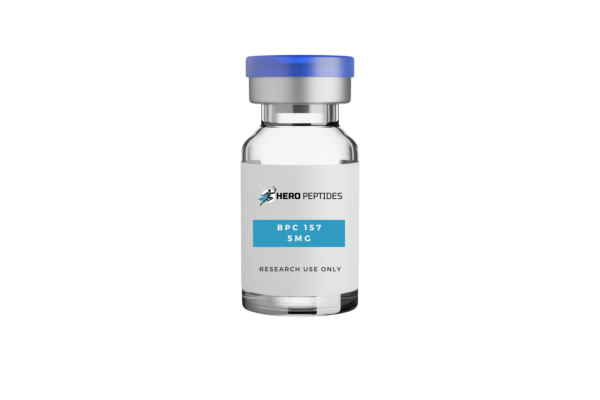
| Hero product | BPC-157 |
A peptide not dissolving can reflect several different problems. The solvent may be unsuitable, the target concentration may be too high, or the material may behave differently after dilution into another vehicle. The visible symptom does not identify the cause by itself.
Begin with the compound’s identity and documentation, then investigate one variable at a time. This guide explains how to frame the problem, record observations, and distinguish nominal concentration from actual recovery. It does not assign one solvent recipe to every peptide.
Origin story: why water does not dissolve every peptide
A peptide’s sequence and chemistry influence its interaction with a solvent. Sigma-Aldrich’s handling guidance notes that no universal solvent both dissolves every lyophilized peptide and preserves compatibility with every biological assay. Solubility and assay suitability must be considered together (Sigma-Aldrich, accessed 2026).
That is why a general reconstitution habit can fail when the material changes. Similar-looking powders can differ in sequence, terminal modifications, counterions, or excipients. A vial’s appearance is a poor guide to its molecular behavior.
Start by matching the vial with its lot documentation and expected identity. If a report or label is ambiguous, resolve that before interpreting the behavior as a property of the named compound. The COA guide explains that first check.
How peptide solubility and recovery work
Distinguish dissolution from dispersion. Material distributed through a liquid is not necessarily dissolved at the molecular level. Visible particles, clouding, or a gel describe observations that need interpretation; they do not establish a known dissolved concentration.
Concentration matters because a preparation can ask a solvent to hold more material than its conditions support. A lower nominal concentration may behave differently, but that change should be evaluated against the assay and material documentation rather than treated as a guaranteed correction.
Also distinguish a stock from its working dilution. A material that appears dissolved in one vehicle may behave differently after the vehicle composition changes. Record the stage at which clouding or particles first appear.
Surface loss creates another possibility. In experiments with three cationic model peptides, Kristensen and colleagues measured adsorption to common glass and plastic containers. Loss of recoverable peptide therefore need not be explained by visible undissolved powder alone (Kristensen et al., 2015).
Key evidence: map the observation to the question
| Observation | Question to investigate | Record to preserve |
|---|---|---|
| Material remains after initial preparation | Is the intended solvent and concentration supported? | Lot, vehicle, nominal amount, and final volume |
| Clouding appears after dilution | Did solvent composition or solution conditions change? | Stock and final vehicle compositions |
| Solution is clear but recovery is low | Could adsorption, incomplete recovery, or chemical change contribute? | Container and analytical method |
| Behavior differs between lots | Are identity, formulation, or handling histories different? | Matching reports and storage records |
The table organizes questions rather than diagnosing a particular vial. A useful observation includes time, appearance, preparation stage, and conditions. The note did not dissolve leaves out most of the information needed to reproduce the problem.
General solubility guidance considers sequence charge and hydrophobic character, but sequence-based expectations remain a starting point. Compatibility with the intended assay still needs evaluation. A solvent that produces a clear stock may alter the assay when carried into the final mixture (Sigma-Aldrich, accessed 2026).
Handling research for mass-spectrometry assay peptides also shows why concentration and container choice belong in recovery assessments. These are specific analytical systems, so their findings should guide the questions asked rather than supply an untested guarantee for another compound (Hoofnagle et al., 2016).
When evaluating a possible change, preserve the original record and give the changed preparation a distinct identifier. Otherwise, later results may be assigned to the initial formulation even though the actual sample no longer has that composition.
Weak spots: what we don’t know
Appearance alone cannot prove purity, identity, complete dissolution, or retained activity. A clear liquid can still contain less recoverable peptide than expected. Visible material can flag a problem without revealing whether it is peptide, another component, or contamination.
Changing temperature, pH, or solvent can change more than solubility. Do not assume that any method producing clarity preserves chemical integrity or assay compatibility. Use compound-specific guidance and evaluate changes within an appropriate laboratory method.
Filtering or separating visible material also does not establish that the remaining liquid contains the original amount. Any removal can alter recovery. A nominal calculation based on the starting vial should not be presented as a measured concentration afterward.
As of November 5, 2026, BPC-157 is not an FDA-approved human medicine, and FDA identifies limited safety information. In April 2026, FDA moved BPC-157 from its category 2 compounding list to its list of nominations withdrawn by the nominators, though that page still records the agency’s safety concerns. That change is not a drug approval. Resolving a laboratory dissolution issue does not establish clinical safety or approval (FDA, 2026).
Handling incomplete preparations in the lab
Consider a nominal 5 mg sample brought to a final volume of 2 mL. The arithmetic gives 2.5 mg/mL only under an assumption of complete recovery. If visible material remains, the calculation does not establish the amount actually dissolved.
If a suitable quantitative method later measures 4 mg recovered in that unchanged 2 mL volume, the recoverable concentration is 2 mg/mL, or 2,000 mcg/mL. A 0.10 mL analytical aliquot contains 200 mcg under that measured-content basis.
That example does not identify where the missing amount went. It simply shows why the original 250 mcg-per-aliquot nominal figure should not survive an unresolved recovery problem. Keep chemical explanation and quantitative result separate until evidence connects them.
Consult the reconstitution guide and calculator for arithmetic, and the storage guide for sample-history records. A calculator cannot determine whether a solvent is compatible or a preparation is fully dissolved.
Peptide not dissolving FAQ
Does undissolved material prove the peptide is impure?
No. Appearance alone cannot distinguish identity, formulation, solubility, or contamination issues.
Does a clear stock guarantee a clear working dilution?
No. Changing vehicle composition and concentration can change the behavior of the preparation.
Can nominal concentration be used after incomplete recovery?
It may describe the original calculation, but it should not be labeled a measured dissolved concentration.
What is Hero BPC-157?
Hero BPC-157 is the catalog’s BPC-157 research material in 5 mg and 10 mg vials. Evaluate dissolution questions using its matching lot documentation and intended assay.
References
- Sigma-Aldrich. Peptide Handling Guide. Technical guidance, accessed November 5, 2026. Source.
- Kristensen K, et al. Adsorption of Cationic Peptides to Solid Surfaces of Glass and Plastic. PLoS One. 2015;10(5):e0122419. Source.
- Hoofnagle AN, et al. Recommendations for the Generation, Quantification, Storage, and Handling of Peptides Used for Mass Spectrometry-Based Assays. Clin Chem. 2016;62(1):48-69. Source.
- U.S. Food and Drug Administration. Certain Bulk Drug Substances for Use in Compounding that May Present Significant Safety Risks. Content current as of April 22, 2026. Accessed November 5, 2026. Source.
For laboratory research use only. Not for human or veterinary use. This article summarizes published research and is not medical advice.