

Research Use Only Peptides: Labels, Evidence, and Laboratory Scope
Understand what a research-use label does and does not establish, how to evaluate analytical documentation, and why clinical evidence and product approval remain separate.
| RUO meaning | Research use only |
|---|---|
| Label scope | A stated research purpose, not a quality measurement |
| Analytical evidence | Identity, purity, and content need appropriate methods |
| Clinical evidence | Separate from chemical characterization |
| Regulatory boundary | Label wording alone does not determine product status |
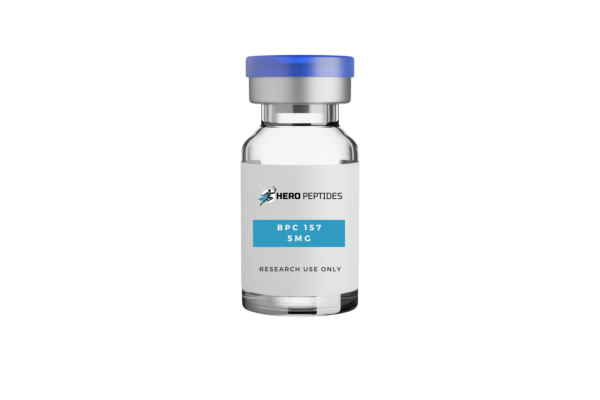
| Hero product | BPC-157 |
Research use only peptides are presented for research rather than as finished medicines. The label describes a stated purpose. It does not, by itself, establish purity, content, sterility, clinical effectiveness, or approval.
Those distinctions help researchers evaluate a material without asking one phrase to answer every question. This guide separates intended use, analytical documentation, biological evidence, and regulatory status, then shows how each belongs in a laboratory record.
Origin story: why a research label is not a complete specification
Laboratory work requires materials characterized for a defined purpose. A receptor assay, an analytical standard, and a clinical product can involve the same named molecule while requiring different evidence and controls.
Peptide reference-standard work illustrates this point. McCarthy and colleagues describe complementary methods for identity, purity, and quantitative assignment. A material’s suitability comes from that characterization in context, rather than a category label alone (McCarthy et al., 2023).
The peptide basics guide explains why sequence and chemical modifications matter. A research label does not replace those identifiers or tell an investigator which molecular form is in the container.
How research scope and evidence fit together
Begin with the actual research question. State which material is required, which quality attributes matter, and which measurements will establish them. A study of receptor activity may need different characterization from a quantitative calibration experiment.
Then separate the categories of evidence. Identity asks what the material is. Purity asks about its composition under stated methods. Content asks how much is measured or assigned. Biological activity asks what it does in a defined system.
Clinical evidence adds another level, involving specified interventions and populations. It does not automatically apply to every supplier lot. Product approval concerns a particular product and evidence package, not merely the spelling of its active-compound name.
Intended use also cannot be read from a label in isolation. In a 2026 warning letter, FDA considered website evidence despite research-use language on the products. The letter is a concrete example of why surrounding claims and context matter (FDA, 2026a).
Key evidence: four questions a label cannot answer
| Question | Relevant evidence | What RUO wording does not supply |
|---|---|---|
| Which material is present? | Appropriate identity testing and lot traceability | A sequence or structural confirmation |
| How much is present? | A defined content measurement or assignment | A measured amount from the label alone |
| Does it work in the intended assay? | Suitable functional evaluation and controls | A guaranteed biological response |
| Is it an approved medicine? | Product-specific regulatory evidence | Approval or clinical equivalence |
FDA’s March 2026 Gram Peptides letter states that research-use statements did not override evidence of intended human drug use found in the firm’s website context. That conclusion concerns the products and evidence described in the letter; it is not a substitute for evaluating another product’s facts (FDA, 2026a).
A separate 2025 letter to GenLabMeds addressed products including retatrutide, semaglutide, and tirzepatide in a compounding context. It illustrates another distinction: a molecule’s appearance in research or clinical literature does not itself establish a pathway for a particular marketed product (FDA, 2025).
For analytical review, ask for the matching lot report rather than relying on a general tested claim. Check the sample identifier, laboratory, dates, methods, units, and actual results. A genuine report can still have a limited test panel.
Hero names Northfield Analytical as its partner for lot-level HPLC and mass spectrometry. Evaluate the matching report’s scope. The partnership provides a traceability reference, while the reported methods and results support the particular analytical conclusions.
Weak spots: what we don’t know
A high HPLC area-purity percentage does not establish every quality attribute. It does not automatically measure milligrams per vial, sterility, endotoxin, or retained activity after storage. Each needed attribute requires appropriate evidence.
The same is true of clinical papers. A result from a defined medicine or investigational formulation does not prove that an uncharacterized research preparation reproduces its identity, exposure, or effect.
As of November 5, 2026, BPC-157 is not an FDA-approved human medicine, and FDA identifies limited safety information. In April 2026, FDA moved BPC-157 from its category 2 compounding list to its list of nominations withdrawn by the nominators, though that page still records the agency’s safety concerns. That change is not a drug approval. A research label or chemical COA does not fill that clinical evidence gap (FDA, 2026b).
Regulatory comments in the cited letters are specific to their documented facts and United States context. They should not be rewritten as a universal rule that all research materials are approved, exempt, or prohibited. This article does not establish a legal status for a particular seller.
Handling research-use materials in the lab
Create a materials record with identity, supplied form, lot, report identifiers, content basis, vehicle, and supported storage conditions. Link each prepared stock and working dilution back to that record. Keep unresolved attributes visible rather than filling them with assumptions.
For nominal preparation math, a 5 mg sample recovered at a final volume of 2 mL gives 2.5 mg/mL, or 2,500 mcg/mL. A 0.10 mL analytical aliquot contains a nominal 250 mcg.
That calculation assumes the declared amount and complete recovery. If a suitable quantitative method supplies a different measured amount, document the result and update calculations on that basis. Arithmetic does not establish the original content or intended-use status.
The reconstitution guide and calculator support math checks. The COA guide explains how to distinguish a stated specification from a measured result.
Research use only peptides FAQ
Does RUO mean FDA approved?
No. The wording does not establish product approval.
Does a research label prove purity or sterility?
No. Those attributes require appropriate evidence.
Does a clinical paper validate every supplier’s vial?
No. The actual material, preparation, and evidence must be matched.
What is Hero BPC-157?
Hero BPC-157 is the catalog’s BPC-157 research material in 5 mg and 10 mg vials. Its matching documentation should be assessed against the requirements of the intended laboratory work.
References
- McCarthy D, et al. Reference Standards to Support Quality of Synthetic Peptide Therapeutics. Pharm Res. 2023;40(6):1317-1328. Source.
- U.S. Food and Drug Administration. 2026a. Gram Peptides, Warning Letter MARCS-CMS 721806. March 31, 2026. Source.
- U.S. Food and Drug Administration. GenLabMeds, Warning Letter MARCS-CMS 713650. September 9, 2025. Source.
- U.S. Food and Drug Administration. 2026b. Certain Bulk Drug Substances for Use in Compounding that May Present Significant Safety Risks. Content current as of April 22, 2026. Accessed November 5, 2026. Source.
For laboratory research use only. Not for human or veterinary use. This article summarizes published research and is not medical advice.