

Mg to Mcg: Peptide Conversion Math Without the Guesswork
Convert milligrams and micrograms, distinguish mass from volume, and verify stock and dilution calculations with worked examples for laboratory records.
| Basic conversion | 1 mg = 1,000 mcg |
|---|---|
| Reverse conversion | 1 mcg = 0.001 mg |
| Mass versus volume | mg and mcg measure mass; mL measures volume |
| Concentration | Mass divided by final solution volume |
| Calculation boundary | Unit conversion does not establish measured content |
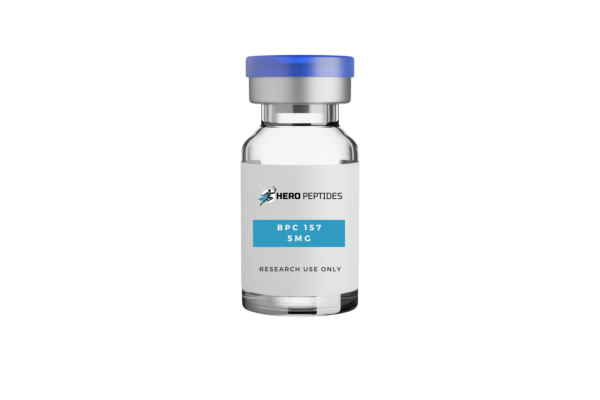
| Hero product | BPC-157 |
Mg to mcg conversion uses one fixed relationship: one milligram equals 1,000 micrograms. Multiply by 1,000 to convert mg to mcg. Divide by 1,000 to go back. The number changes because the unit changes, not because the sample gains or loses material.
The harder errors usually start when mass is mixed with volume or concentration. This guide separates those quantities, then works through stock preparation, aliquots, and dilution. Every example is laboratory arithmetic with its assumptions stated.
Origin story: two prefixes, one mass
In the SI system, milli means one thousandth and micro means one millionth. Applied to the gram, those definitions give 1 mg = 0.001 g and 1 mcg = 0.000001 g. Their ratio is 1,000 (BIPM, accessed 2026).
The formal SI symbol for microgram uses the Greek micro symbol, µg. This guide uses mcg for readability in laboratory examples. Whichever notation a report uses, keep the unit explicit and consistent rather than leaving a bare number.
A vial labeled 5 mg is nominally labeled with the same mass as 5,000 mcg. Rewriting that label in a smaller unit does not provide a new measurement or confirm how much peptide is actually present.
How mg-to-mcg conversion works
For milligrams to micrograms, use mcg = mg × 1,000. For micrograms to milligrams, use mg = mcg ÷ 1,000. Write the starting unit before choosing the operation. The direction matters.
For example, 0.25 mg × 1,000 = 250 mcg. In reverse, 250 mcg ÷ 1,000 = 0.25 mg. A two-way check should return the starting amount. If it does not, revisit the operation or the decimal placement.
Mass and volume cannot be converted directly without concentration. Asking how many mL equal 500 mcg leaves out a required variable. At 1,000 mcg/mL, that mass occupies 0.50 mL; at 5,000 mcg/mL, it occupies 0.10 mL.
Concentration adds a denominator. A 2 mg/mL stock is also 2,000 mcg/mL. Both describe the same solution. Converting the numerator from mg to mcg does not change the milliliter denominator.
Key relationships and worked conversion tables
| Milligrams | Micrograms | Reverse check |
|---|---|---|
| 0.05 mg | 50 mcg | 50 ÷ 1,000 = 0.05 mg |
| 0.25 mg | 250 mcg | 250 ÷ 1,000 = 0.25 mg |
| 0.50 mg | 500 mcg | 500 ÷ 1,000 = 0.50 mg |
| 1 mg | 1,000 mcg | 1,000 ÷ 1,000 = 1 mg |
| 5 mg | 5,000 mcg | 5,000 ÷ 1,000 = 5 mg |
| 10 mg | 10,000 mcg | 10,000 ÷ 1,000 = 10 mg |
These are exact prefix conversions, consistent with the SI prefix definitions. They are not measurements of a vial’s contents. The distinction between a unit definition and an analytical result remains important even when the arithmetic is simple (NIST, accessed 2026).
Now add final volume. A nominal 5 mg sample at a final solution volume of 2 mL gives 5 ÷ 2 = 2.5 mg/mL. Converting first gives the same result: 5,000 mcg ÷ 2 mL = 2,500 mcg/mL.
Use unit cancellation for an aliquot: 2,500 mcg/mL × 0.20 mL = 500 mcg. The mL terms cancel. If a calculation meant to find mass still ends with mL or mcg/mL, its setup needs another look.
For dilution, a 0.20 mL portion of that stock contains 500 mcg. Bringing the portion to a final volume of 1 mL gives 500 mcg/mL, a fivefold dilution. The amount transferred stays 500 mcg under the stated complete-recovery assumption.
| Quantity | Before dilution | After dilution to 1 mL |
|---|---|---|
| Peptide mass | 500 mcg | 500 mcg |
| Volume | 0.20 mL | 1 mL |
| Concentration | 2,500 mcg/mL | 500 mcg/mL |
Weak spots: what arithmetic cannot establish
Unit conversion cannot correct an uncertain input. A nominal label amount, an analytically measured content value, and total powder mass may represent different quantities. Identify which one is being used before calculating concentration.
NIST’s peptide reference-material report illustrates why area purity and peptide mass purity are distinct. Do not multiply a vial label by an HPLC area percentage and call the result measured content without a justified quantitative basis (NIST, 2007).
Rounding is another separate issue. Keep enough precision during intermediate steps and report a final value suited to the measurements. A calculator can display many decimal places even when the preparation volume is much less certain.
As of November 5, 2026, BPC-157 remains unapproved as a human medicine in the United States. In April 2026, FDA moved BPC-157 from its category 2 compounding list to its list of nominations withdrawn by the nominators, though that page still records the agency’s safety concerns. That change is not a drug approval. Correct mass conversion does not establish biological suitability, safety, or approval of the material (FDA, 2026).
Handling conversion calculations in the lab
Keep a record of the source amount, its basis, final volume, stock identifier, and calculation. For a nominal 10 mg sample brought to 2 mL, write 10 mg = 10,000 mcg, then 10,000 mcg ÷ 2 mL = 5,000 mcg/mL.
A 0.05 mL analytical aliquot contains 250 mcg. On a U-100 scale that volume corresponds to 5 units, but the notebook should retain 0.05 mL and the stock concentration. Scale markings alone lose essential context.
Use a leading zero for values below one, such as 0.05 mL. Keep a space between the number and unit. Consistent notation makes a decimal shift easier to notice during review.
The reconstitution guide and calculator support the arithmetic. The U-100 guide separates scale readings from mass, while the COA guide explains the input measurements.
Mg-to-mcg FAQ
How many mcg are in 1 mg?
There are 1,000 mcg in 1 mg.
Does 500 mcg always occupy 0.10 mL?
No. That volume is correct only at a concentration of 5,000 mcg/mL.
Does changing mg to mcg change concentration?
It changes the numerical expression and unit, not the physical solution. For example, 1 mg/mL equals 1,000 mcg/mL.
What is Hero BPC-157?
Hero BPC-157 is the catalog’s BPC-157 research material, listed in 5 mg and 10 mg vials. Those nominal amounts convert to 5,000 mcg and 10,000 mcg respectively.
References
- Bureau International des Poids et Mesures. SI prefixes. Accessed November 5, 2026. Source.
- National Institute of Standards and Technology. NIST Guide to the SI, Chapter 4: The Two Classes of SI Units and the SI Prefixes. Accessed November 5, 2026. Source.
- National Institute of Standards and Technology. Reference Material 8327: Peptide Reference Material for Molecular Mass and Purity Measurements. Archived report of investigation, March 19, 2007. Source.
- U.S. Food and Drug Administration. Certain Bulk Drug Substances for Use in Compounding that May Present Significant Safety Risks. Content current as of April 22, 2026. Accessed November 5, 2026. Source.
For laboratory research use only. Not for human or veterinary use. This article summarizes published research and is not medical advice.